
A dark-fantasy RPG reference
Shards of Order wiki
One deck. Three lives.
This Shards of Order wiki maps the relationships that drive the entire campaign: Anton, Yana, and Lev develop through personal skill trees but draw from one shared deck; weapons, armor, and memories can insert cards into that common pool; and every card advances combat on a visible enemy countdown instead of a conventional turn. Start here to choose a practical route through combat timing, deck quality, equipment decisions, early progression, and Journal-led exploration without relying on invented card totals, item lists, or quest steps.
Open the walkthroughShared-deck atlas
Map relationships before memorizing cards.
The useful unit in Shards of Order is not a single hero or a single card. It is the full path from a personal skill tree, through the shared draw pile, into a combat timeline where enemies announce when they will act. Anton, Yana, and Lev each support multiple playstyles and have personal story arcs, but a card added for one of them changes the future hands available to the whole party.
That relationship makes every progression choice both local and collective. A new skill can strengthen one hero while lowering the chance that another hero draws the response needed for the nearest enemy countdown. A piece of equipment can improve its wearer and also insert a card that changes later sequences. Read the three lanes together, then use the shared deck as the final test for each choice.
The braid is a planning model rather than a class chart. The official material establishes three named heroes, personal trees, and one common deck, but it does not publish safe class labels or a complete card taxonomy. The atlas therefore compares verified consequences: who owns the progression choice, what enters the common pool, and whether the resulting hand still supports the party plan.
- Personal progression begins with Anton, Yana, or Lev.
- Skills and gear can contribute cards to one mixed draw pile.
- The next visible enemy action determines the immediate timing problem.
- Respec lets the player test a different personal contribution without restarting the campaign.
02 / Read the shared hand against one combat clock.
Read the shared hand against one combat clock.
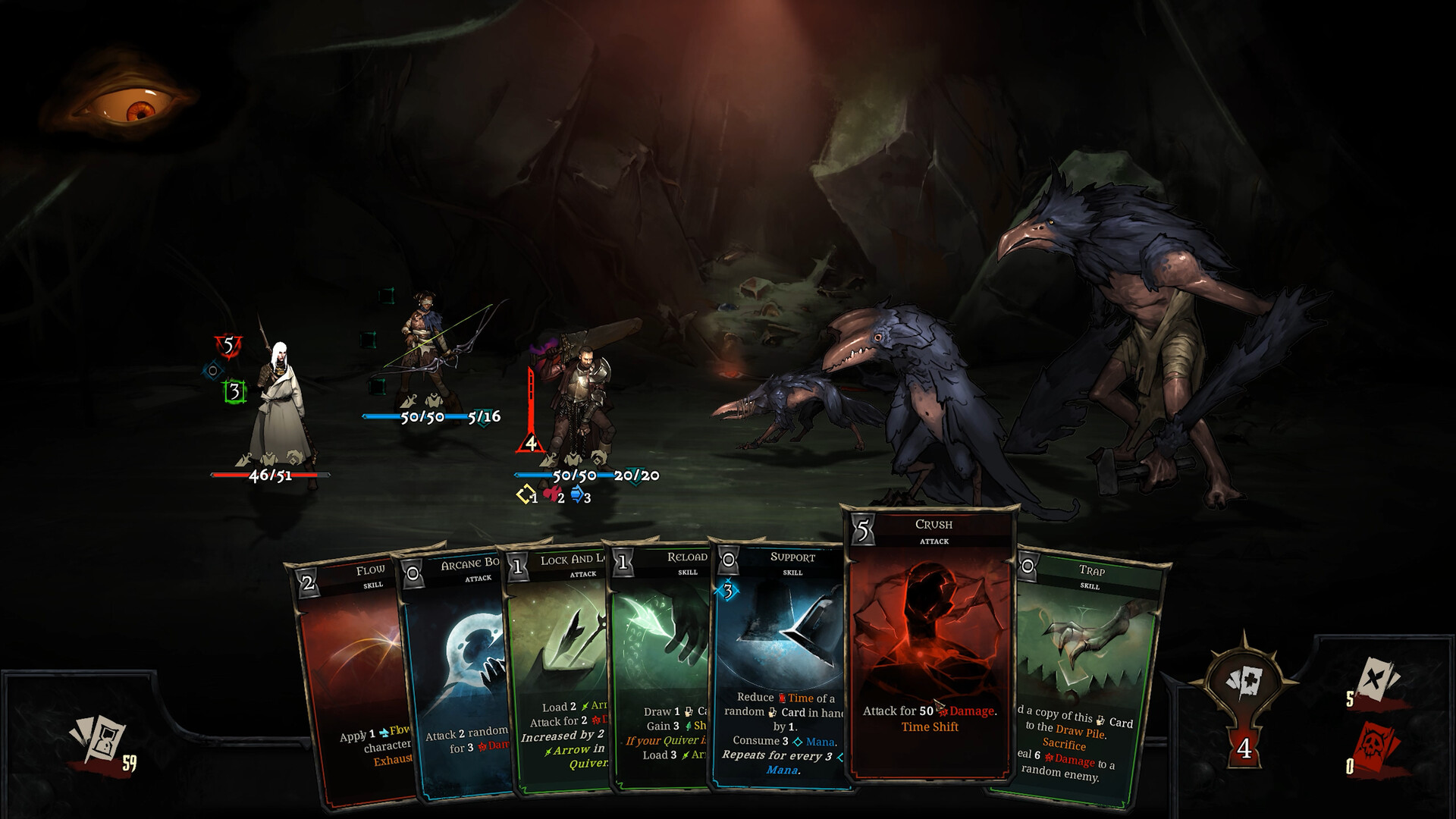
Combat has no conventional turns and no mana points. Enemy actions appear on visible countdowns, while playing cards changes the distance to those actions. A card therefore has two meanings at once: the direct effect it creates and the amount of time it spends before the next announced threat arrives.
The official release trailer shows that relationship in motion. Use it to recognize the shared hand, the three-hero party, and the countdown presentation, then open the combat guide for a repeatable reading order. The wiki does not infer exact formulas from the footage; it uses visible interface evidence only to explain which information the player should inspect.
03 / Read the world like a record.
Read the world like a record.
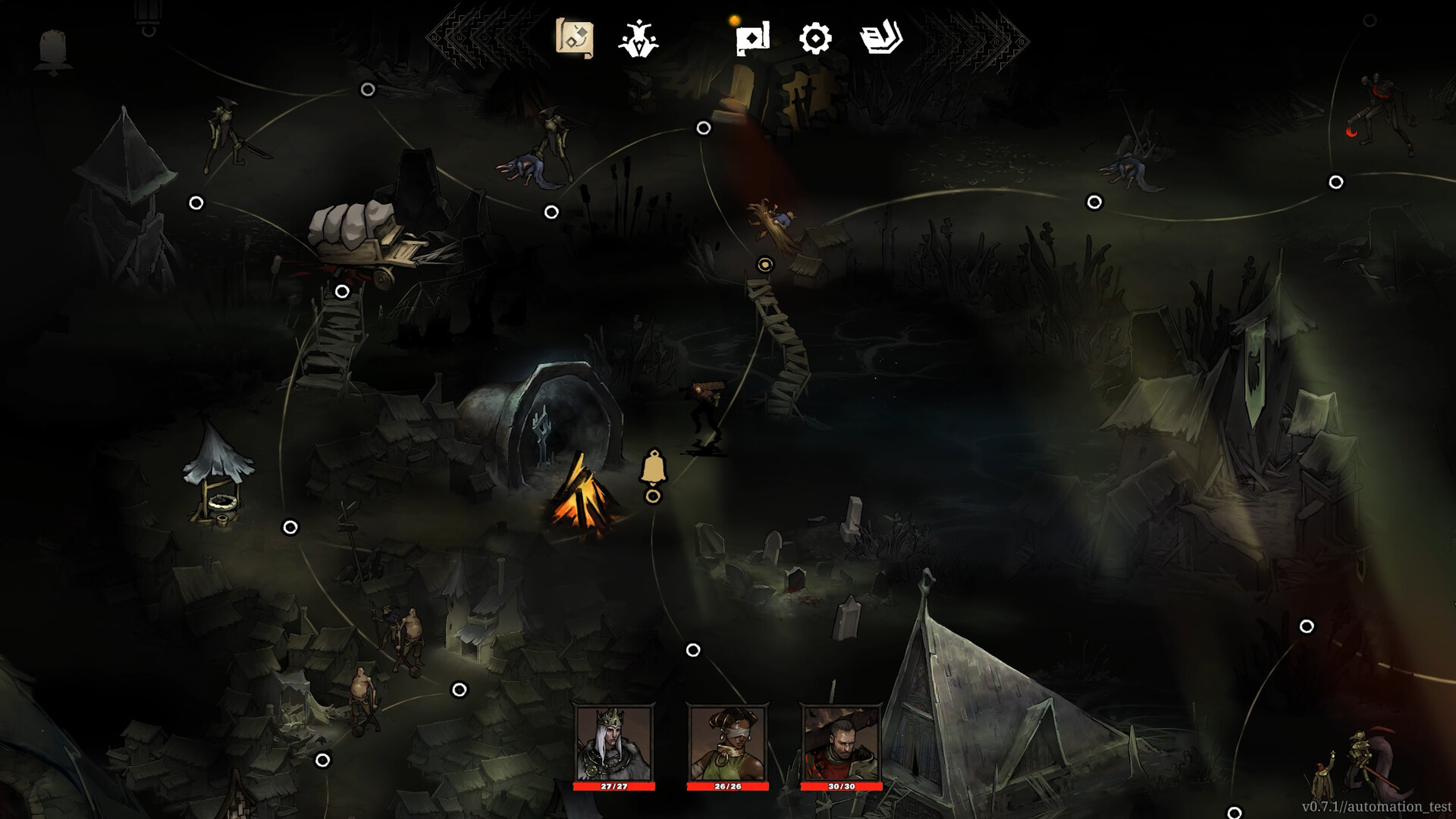
The campaign spans three regions shaped by shattered Laws governing life, death, and time. Exploration does not reduce every decision to a quest marker. Developer updates describe a Journal that records events and suggests possible solutions, asking the player to connect recent conversations, choices, equipment, and progression to the route ahead.
Attribute cards can unlock interactions during story events, so the deck reaches beyond combat. A progression choice may change which possibility becomes available when the party revisits a Journal thread. The world guide explains this structure without assigning unsupported names to the regions, nodes, encounters, or bosses visible in official media.
04 / Choose the question that blocks your next decision.
Choose the question that blocks your next decision.
Use the walkthrough when several systems are competing for attention in the first hours. Use the combat guide when an enemy countdown is the immediate problem. Open characters, cards, or equipment when a progression choice changes the common hand. Open the world guide when the Journal, an attribute check, or a route decision needs context.
These routes are deliberately broad because the current official evidence supports durable system guides, not a complete entity catalog. The direct competitor covers more individual URLs, but expanding this site with invented bosses, regions, item names, rankings, or card totals would make the reference less useful. Each published route instead answers one distinct player task with the strongest available first-party facts.
| Understand | Start | Shared-deck atlas |
|---|---|---|
| Start with the spoiler-light walkthrough | Walkthrough | Use the walkthrough when several systems are competing for attention in the first hours. Use the combat guide when an enemy countdown is the immediate problem. Open characters, cards, or equipment when a progression choice changes the common hand. Open the world guide when the Journal, an attribute check, or a route decision needs context. |
| Combat & time | Combat & time | Read the shared hand against one combat clock. |
| Compare the three playable heroes | Characters | Map relationships before memorizing cards. |
| Cards & shared deck | Cards & shared deck · Equipment | Skills and gear can contribute cards to one mixed draw pile. |
| World & Laws | World & Laws | Read the world like a record. |